
4-Day Itinerary in Istanbul: A Perfect Tour Guide
Planning a trip to Istanbul and looking for the perfect 4-day itinerary that covers all the must-see sites, delectable food spots, vibrant neighborhoods, and fantastic accommodations? You’re in the right place. In this guide, we’ll dive into the best parts of the city, ensuring you make the most of your visit, capture stunning photos, and experience the true essence of Istanbul.
Istanbul is a city where East meets West, blending rich history with modern vibrancy. It can be overwhelming to navigate, especially for first-time visitors, but don’t worry. This itinerary is designed to help you maximize your time and enjoy every moment in this incredible city.
Before we delve into the itinerary, let’s cover some essential basics. Istanbul straddles Europe and Asia, divided by the iconic Bosphorus Strait. It's a bustling metropolis with a unique cultural blend. Knowing the best ways to get there and the ideal times to visit can make your trip smoother.
Introduction
How to reach Istanbul
Plane
If you’re traveling to Istanbul by plane, you’ll need to know that there are two main airports: Istanbul Airport (IST) and Sabiha Gökçen Airport (SAW). Sabiha Gökçen Airport is slightly further from the city center.
From Istanbul Airport (IST):
Metro: The quickest and most affordable way to reach the city center is by metro. The journey takes approximately 40-50 minutes and costs less than £1. You will need to purchase an Istanbulkart, a travel card costing around £4, which can be used by multiple passengers. Children under 7 travel for free. Exit the airport via exit 11, take the M11 metro line to Gayrettepe Station, then transfer to the M2 line to Vezneciler Station. From there, it’s about a 15-minute walk to the historic center. Note that the metro operates from 6 am to midnight, so this option is limited to certain flight times.
Taxi: If you are in a group of 4-5, a taxi can be a cost-effective option. The fare will be around £20, but split among the group, it will cost each person about £5 to £7. The journey to the city center takes approximately 35-40 minutes. For example, when we traveled in a group of five, we took a large taxi from Istanbul Airport to Taksim Square. Our flight landed at 4:50 am, and the taxi cost us 1600 Turkish lira, roughly £7 each.
Shuttle Bus: Havaist buses run 24/7, costing around £4. The journey takes about an hour, with buses departing frequently. The bus stops at Aksaray – Beyazit Meydan, a 10-minute walk from the historic square.
From Sabiha Gökçen Airport (SAW):
Tram and Ferry: Take the T4 tram to Kadıköy on the Asian side, then switch to the T3 tram to the ferry port. From there, take a sea taxi to the European side. This option can be confusing and time-consuming.
Taxi or Bus: Taxis offer a more straightforward option. Havaist buses also provide a convenient and affordable way to reach the historic center. These buses run 24/7, with frequent departures. Alternatively, Havabus offers similar routes but with a more limited timetable.
Bus
Turkey has an extensive and efficient bus network, making it a great option for incorporating Istanbul into a broader travel itinerary. Popular destinations from Istanbul include Izmir, Selçuk, Bodrum, and Cappadocia.
Metro Turizm: One of the largest bus companies in Turkey, serving most regions and neighboring countries.
Busbud: An excellent platform for checking all available bus options and booking tickets
Car
Driving around Turkey is quite feasible, though navigating Istanbul’s chaotic traffic can be challenging and is best suited for confident drivers.
Car Rentals: Available at both IST and SAW airports, as well as within the city, major international and local car rental companies provide a range of options. Booking in advance is recommended, especially during peak travel seasons.
Understanding these travel options will help you choose the best method for getting to Istanbul, ensuring a smooth start to your adventure.
The Best time to Visit Istanbul
Choosing the right time to visit Istanbul can significantly enhance your travel experience. Istanbul experiences a range of weather conditions throughout the year, and timing your visit can help you avoid the extremes of hot summers and cold, wet winters.
Spring (April to June)
Weather: Spring is one of the best times to visit Istanbul. The weather is mild and pleasant, with temperatures ranging from 15°C to 25°C (59°F to 77°F).
Events: This period is also marked by beautiful blooming flowers, especially tulips, which are celebrated during the Istanbul Tulip Festival in April.
Crowds: Tourist crowds are moderate, making it easier to explore the city's attractions without long waits.
Summer (July to September)
Weather: Summer in Istanbul can be hot and humid, with temperatures often exceeding 30°C (86°F). However, this is also the peak tourist season.
Activities: This season offers a vibrant atmosphere with numerous outdoor events, festivals, and longer daylight hours for sightseeing.
Crowds: Be prepared for larger crowds at popular tourist spots and higher accommodation prices.
Autumn (September to November)
Weather: Autumn is another ideal time to visit, with temperatures cooling down to a comfortable range of 15°C to 25°C (59°F to 77°F).
Events: The city is less crowded than in summer, and you can enjoy various cultural events and festivals.
Crowds: Fewer tourists mean shorter lines and more availability at hotels and restaurants.
Winter (December to March)
Weather: Winters in Istanbul are cold and wet, with temperatures ranging from 3°C to 10°C (37°F to 50°F). Snow is possible but not common.
Activities: While winter is the least popular time for tourists, it offers a unique charm. You can explore the city's indoor attractions, such as museums and palaces, without the crowds.
Crowds: This is the off-season, so you’ll find lower prices and fewer tourists, making it an excellent time for budget travelers.
Summary
Best Times: The best times to visit Istanbul are during the spring (April to June) and autumn (September to November) when the weather is mild and the tourist crowds are manageable.
Considerations: Depending on your preferences for weather, crowd sizes, and activities, you can choose the season that best suits your travel plans. Keep in mind that Istanbul has something to offer year-round, from its rich historical sites to its vibrant cultural scene.
By planning your visit during these optimal times, you can enjoy a more pleasant and fulfilling experience in this magnificent city. For instance, we traveled in October and found the weather perfect for sightseeing, with pleasant temperatures and manageable crowds.
From the delightful Turkish tea and famous baklava to the iconic Hagia Sophia and scenic Bosphorus cruise, let's dive into our carefully crafted 4-day itinerary to ensure you experience the best of Istanbul. This itinerary is curated based on my personal experience, assuming your flight lands in the morning, allowing you to maximize your stay over four days. It focuses on the European side of Istanbul, with the Asian side to be covered in later posts. Feel free to tweak it according to your preferences and available time. I have included the places to visit considering the travel time between spots, how to maximize your experience, and, of course, where to savor the unmissable Turkish cuisine.
Day 4
Galata Tower
Bulgur Palace
The Blue Mosque (Sultanahmet Camii)
Basilica Cistern
Hagia Sophia (Aya Sofia)
Day 1
Beyoğlu
Topkapi Palace
Grand Bazaar
Istiklal Street (İstiklal Caddesi)
Day 2
Egyptian/Spice Bazaar
Taksim Square
Dolmabahçe Palace
Yıldız Palace (Yıldız Sarayı)
Day 3
Princes Islands
For accommodation, Beyoğlu is a fantastic choice. This vibrant district is known for its trendy cafes, boutique hotels, and lively atmosphere, making it ideal for travelers who enjoy being at the heart of the action. Other great areas to consider include Sultanahmet, for its proximity to historical landmarks, or Kadıköy on the Asian side, for a quieter, local vibe.
I would personally recommend Beyoğlu to stay as per this itinerary.
Start your exploration at the iconic Hagia Sophia, a masterpiece of Byzantine architecture. Its stunning dome, mosaics, and rich history make it a must-visit landmark.
Built in 537 AD and standing through the centuries as a monument to the architectural grandeur of its day and a landmark in the history of world art, Hagia Sophia is an indisputable masterpiece of this city which has been the capital of three empires: Byzantine, Roman and Ottoman. Hagia Sophia, whose name means "the Divine Light", took 5 years to complete, though on December 27, 537, Justinianus, the Emperor of the day, had the praises chanted under its extraordinary dome. The 56m wide and 32.6m wide dome seems to float in the air, lying over the building through a massive arch. The 40 small windows around its base bathe this overwhelming church in light, imaging a bridge in heaven between earth and Heavens. An experience never to be forgotten, Hagia Sophia, architectural, historical and artistic comprehension, will accompany you through the various interesting stories.
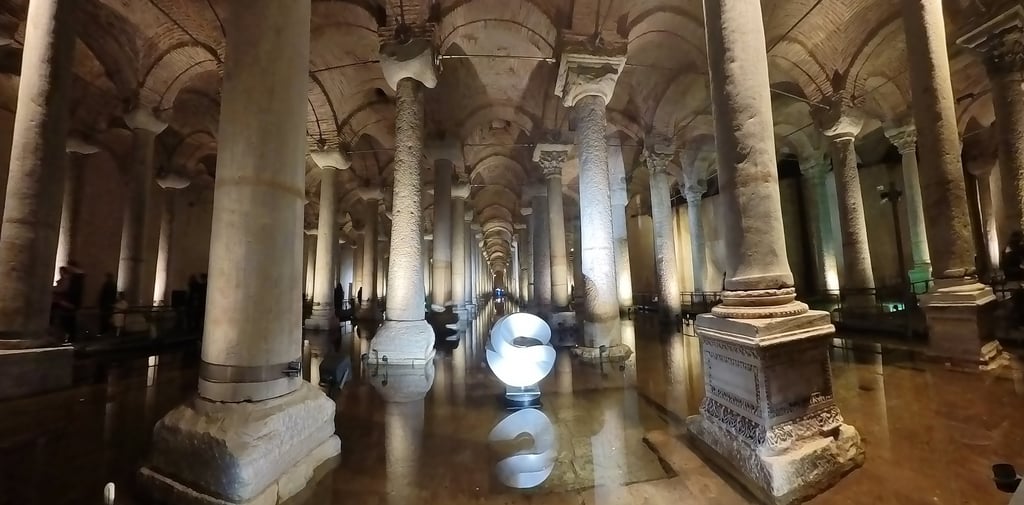
A short walk from Hagia Sophia is the Basilica Cistern, an ancient underground water reservoir. With its dim lighting, columns, and the famous Medusa head carvings, the cistern offers an atmospheric and unique experience.
The Basilica Cistern, built in 532 AD during the reign of Emperor Justinian I, is one of Istanbul's most fascinating underground structures. Originally constructed to supply water to the Great Palace of Constantinople, it features 336 marble columns, many repurposed from ancient temples. The cistern is famous for its eerie atmosphere, softly lit arches, and the mysterious Medusa head carvings at its base, which continue to intrigue visitors.
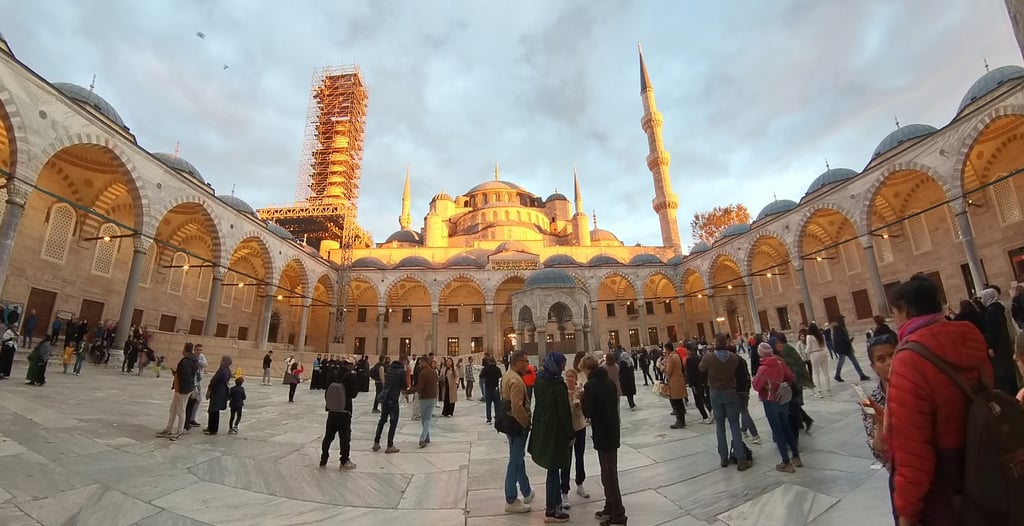
Next, head to the Blue Mosque, officially known as the Sultan Ahmed Mosque, was built between 1609 and 1616 during the rule of Sultan Ahmed I. It is renowned for its six towering minarets and stunning interior adorned with over 20,000 handmade blue Iznik tiles, which give the mosque its popular name. As an active place of worship, it remains one of Istanbul’s most iconic landmarks, attracting visitors with its breathtaking Ottoman architecture and serene courtyard.
Respect the dress code and prayer timings, as it’s an active place of worship.
End your day with a visit to Bulgur Palace, a smaller yet charming site with impressive Ottoman-style architecture. It’s an excellent way to wind down your first day in Istanbul.
The Bulgur Palas, originally the Bolulu Habip Bey Mansion, is a historic mansion in Istanbul, designed by Italian architect Giulio Mongeri in 1912. Commissioned by Mehmet Habip Bey, its construction was financed through grain and bulgur trade during World War I but remained unfinished due to his exile and financial struggles. Later owned by the Ottoman Bank and later Garanti Bank, it was abandoned for years before being acquired by the Istanbul Metropolitan Municipality in 2021. After restoration, it reopened in February 2024 as a library, archive, and cultural center. The First National Architectural Movement-inspired building spans 3,750 m², featuring 81 rooms, a library with 25,000 books, and an observation terrace.
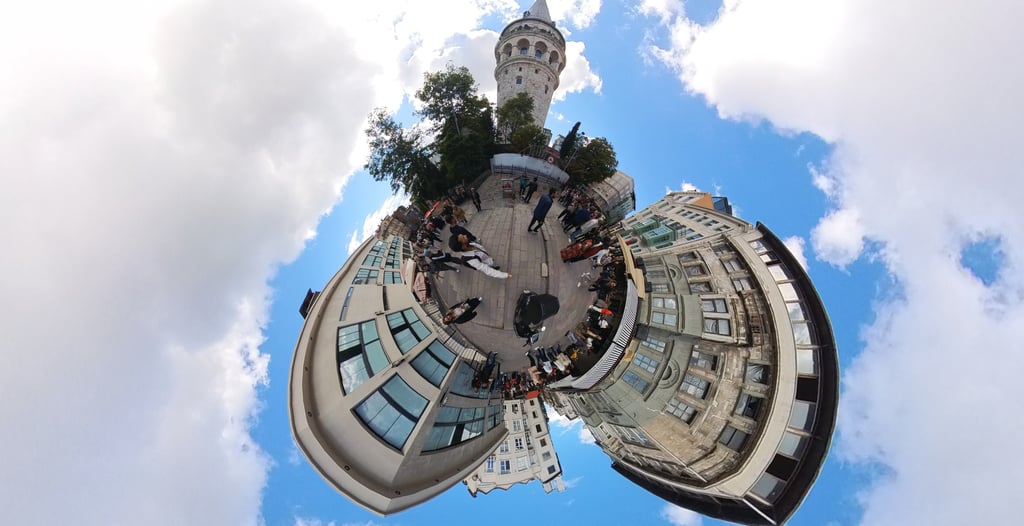
Begin your day with panoramic views of Istanbul from the top of Galata Tower. This medieval stone tower offers breathtaking vistas of the Bosphorus and the city’s skyline.
One of Istanbul’s most prominent symbols, Galata Tower offers a breathtaking panoramic view of the city from its 63-meter high observation terrace. Although many refer to the tower as the Galata Tower, the actual name is Christea Turris. Erected in 528 AD, the upper section of the tower, built entirely of wood by the Genoese themselves, was demolished and rebuilt in its original form in 1348 due to a fire. According to a myth, Hezarfen Ahmet Celebi flew from Galata Tower to Uskudar with the help of artificial wings.
Explore the grandeur of the Topkapi Palace, the former residence of Ottoman sultans. Visit the Harem section, treasury, and beautifully landscaped courtyards.
There are a few places in Istanbul that any visitor must visit, and Topkapi Palace is one of them. This sprawling palace, which stands as a testament to the grandeur of the Ottoman Empire, is one of Istanbul’s biggest attractions. An architectural masterpiece, this exquisite palace, along with its stunning courtyards, beautiful gardens, and an exceptional collection of jewel-encrusted attractions, served as the residence of the sultans and their families for almost four centuries.
As with so much of Istanbul’s vast plans, this is a place in which it is vastly enriched by taking a tour. A good guide gives life to what might be just ornamental brickwork, helps untangle the maze of history and story in the stunning chambers, and adds richness to one’s understanding of a place that has both symbolized and physically shaped Istanbul for centuries. On a trip to Istanbul, it is vital to experience the best of the city’s imperial heritage, and a visit to this magnificent palace is the best way of doing that.
Dive into the bustling atmosphere of the Grand Bazaar, one of the oldest covered markets in the world. It’s the perfect place for shopping and soaking in Istanbul’s vibrant culture.
The Grand Bazaar (Kapalıçarşı) is the oldest and largest covered market in the world, with 61 covered streets and over 3,000 shops. It is estimated that almost a quarter of a million people visit the Grand Bazaar daily. It exhibits the true dictator of Istanbul’s spirit: a bustling marketplace where tourists wander alongside locals. Shopkeepers greet their patrons in half a dozen languages, sharing tea and anecdotes alongside a seemingly inexhaustible supply of carpets, jewels, ceramics, and leather goods. Hand-woven kilims, made-to-measure suits, and intriguing antiques are also available.
Visit the Egyptian Bazaar, also known as the Spice Bazaar, to experience the tantalizing aromas of exotic spices, teas, and Turkish delights. These bazaars are ideal for finding souvenirs and sampling local flavors.
Start your day with a walk along Istiklal Street, a bustling pedestrian avenue lined with shops, cafes, and historic architecture. It's a great spot for people-watching and grabbing a coffee.
The street is pedestrianized, so thousands of people every day walk from Taksim to Tunnel. There are a great number of theatres, movie theaters, libraries, art galleries, bookstores, design shops, cafeterias, pubs, nightclubs, hotels, rooftop hotels, rooftop bars, and Turkish baths located just off Istiklal's little side streets. An antique tram went through the avenue and provided sightseeing to tourists visiting the street all year long. The national library, the Cicek Pasaji, the Nevizade restaurant street, the side streets, and three churches, the St. Antoine church, the Surp Vortvots Vorodman church, and Calictus were active in the 18th century and are mainly Byzantine. The Central Post Office is a historical building that contains Ottoman and ancient artifacts from the Byzantine period.
At the heart of modern Istanbul, Taksim Square is a hub of activity and a gateway to exploring Beyoğlu. It’s a vibrant area filled with cultural and historical significance.
Taksim Square is known for its cosmopolitan character. One part of the street is used only by pedestrians, and the street is packed with a variety of cafes, restaurants, galleries, and shops. Taksim is also the modern heart of Istanbul, a very popular meeting place with its shops, clubs, and entertainment venues. The nearby 48-meter tall Istiklal Victory Monument, built in memory of Atatürk's triumph in the War of Independence, adds to the cosmopolitan flair of Taksim along with the Atatürk Cultural Centre, numerous hotels, nightclubs, and cinemas. The most popular meeting point in Taksim Square is the Monument of Independence. Built in 1928, it commemorates the first anniversary of the foundation of the Turkish Republic in 1923. Straight ahead from the square when facing the Monument, there is the Tower of Beyoğlu, built in 1327 as a fort.
Visit Dolmabahçe Palace, the lavish European-style palace that served as the administrative center of the late Ottoman Empire. Its grandeur and opulence make it a highlight of any trip.
The Dolmabahçe Palace, built between 1843 and 1856 under Sultan Abdülmecid I, served as the main administrative center of the Ottoman Empire in its later years. Located on the Bosphorus Strait, it blends Ottoman, Baroque, Rococo, and Neoclassical architectural styles. The palace features 285 rooms, 46 halls, and the world's largest Bohemian crystal chandelier. It was also the residence of Mustafa Kemal Atatürk, the founder of modern Turkey, during his final years. Today, it stands as a museum, showcasing the grandeur and opulence of the Ottoman era.
End your day at Yıldız Palace, a serene complex surrounded by lush gardens. It was once a royal residence and offers a peaceful retreat from the city’s hustle and bustle.
The Yıldız Palace, built in the 19th century, served as the last major residence of Ottoman sultans, particularly Sultan Abdulhamid II, who ruled from 1876 to 1909. Located on a hilltop in Beşiktaş, it is a vast palace complex surrounded by lush gardens and includes several pavilions, a theater, and the Yıldız Mosque. The palace showcases a mix of Ottoman and European architectural styles and was a strategic retreat for the sultan due to its fortified position. Today, parts of the palace function as a museum, offering visitors a glimpse into the late Ottoman era’s royal life.
Finish your day at The Local Grill by Doğan Chef enjoying the Turkish special cuisines with a warm welcome from the owner. The authentic flavors and traditional cooking techniques transport you straight to Turkey with every bite.
Take a ferry to the Princes’ Islands, a cluster of serene islands free of motor vehicles. Spend the day on Büyükada, the largest of the islands, where you can enjoy horse-drawn carriage rides or rent a bike to explore the charming streets and historic mansions. End your day with a relaxing meal by the sea before heading back to Istanbul to conclude your journey. More on Princes Island to be followed soon.
As your 4-day adventure in Istanbul comes to an end, you'll find yourself enriched by the city's remarkable blend of history, culture, and vibrant energy. From the majestic domes of ancient mosques to the bustling spice markets and tranquil Bosphorus waters, Istanbul offers an unforgettable journey through time that will leave you longing to return. While this itinerary helps you experience the city's highlights, Istanbul's countless hidden gems ensure there's always something new to discover on your next visit.
Have you explored Istanbul using this itinerary? Share your experiences in the comments below! Planning a trip to this magical city? Pin this guide for later or subscribe to our newsletter for more travel tips and updated information. If you need personalized recommendations or have questions about visiting Istanbul, don't hesitate to reach out—we're here to help make your Turkish adventure truly exceptional!

Contact us
info@dreamvoyage360.com
© 2026 Dream Voyage 360 Ltd.
Follow us


Registered with Companies House UK- 16946530
Links
71-75 Shelton Street, Covent Garden, London, United Kingdom, WC2H 9JQ
+44 (0) 7818923362
Website designed by Ek Blink Solutions